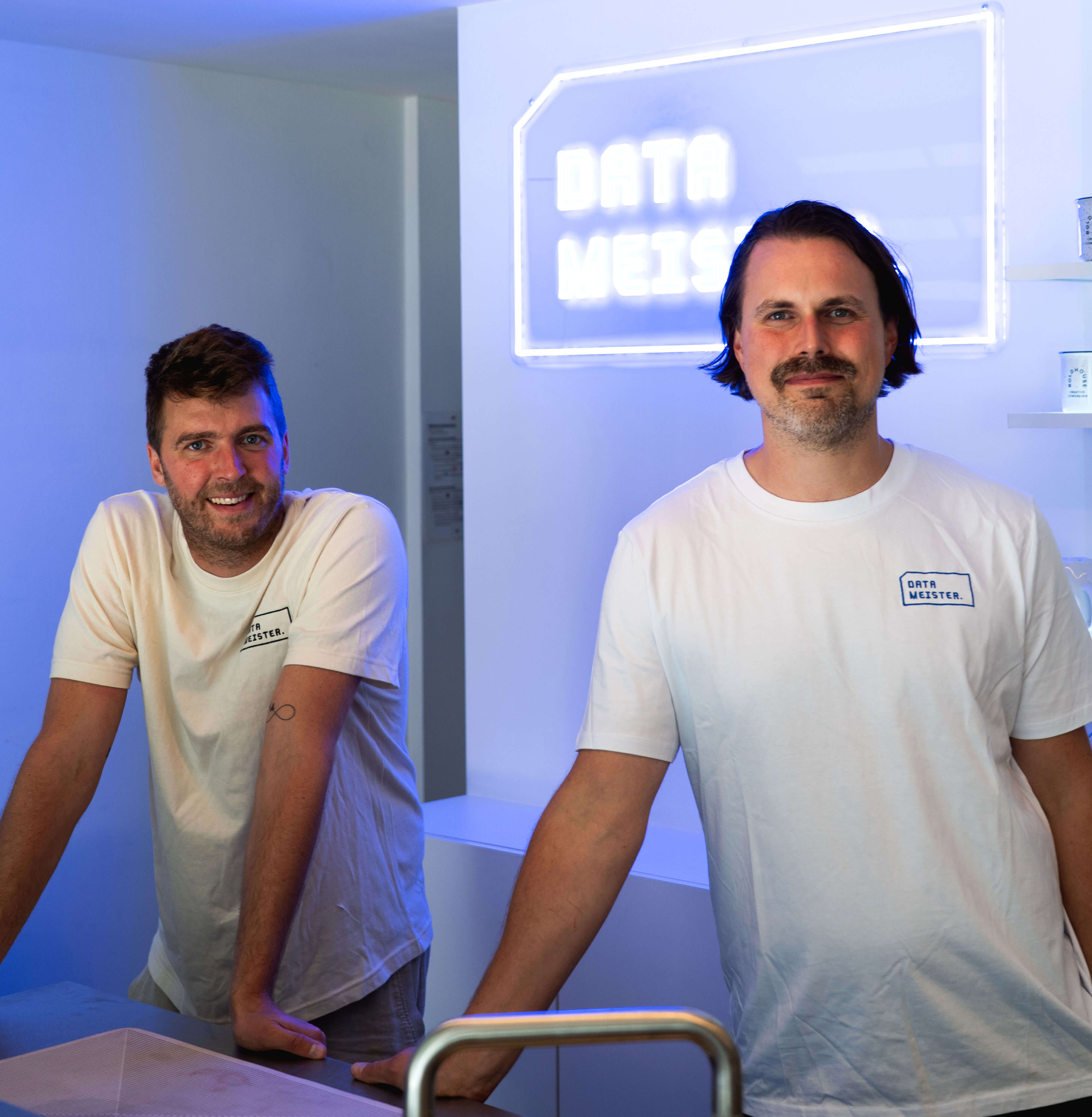
Datameister is a deep-tech AI lab in Ghent, founded in 2023 by Ruben Verhack and Axel Vlaminck out of one conviction: the AI problems worth doing are the hard, deep ones, and they are worth going long on. Our work has run from cybersecurity to medical imaging to sports analytics, and has converged on spatial and visual intelligence and, now, Physical AI.
We are bootstrapped and built on real projects: every line of our code has shipped in a client's production system. What began as the two of us is now a team of more than a dozen engineers and researchers.
Result: the depth, the track record, and the in-house R&D to take on the AI problems most teams avoid.
Why we started Datameister
We started Datameister in June 2023, the two of us, Axel and Ruben, out of three frustrations.
The first was academic. Ruben had spent years in research and loved its technical depth, but the impact was missing: work that is excellent on paper does not always change anything in the real world.
The second was about where we live. Ghent punches far above its weight, a top-ten global density leader for tech, but it is better known for SaaS than for deep technical work. We wanted to do the harder, more research-heavy AI here.
The third was about time horizons. The investor climate rewards quick returns, which pushes companies toward thin products, the ChatGPT wrappers of the world. Those have their place, but it is not our game. We wanted room to go deep and long, where the hard problems actually get solved.
So we built a lab that could do exactly that: independent, technically deep, and patient enough to back its own R&D.
Bootstrapped, and built on real projects
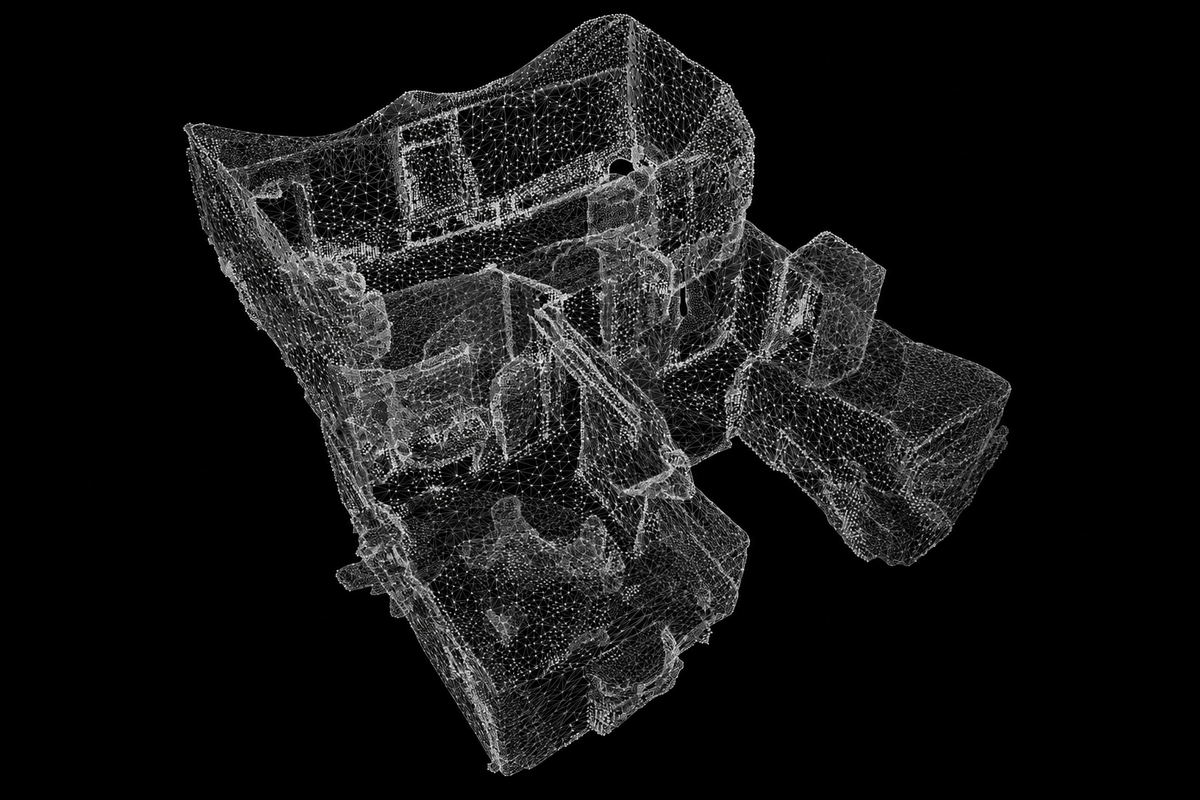
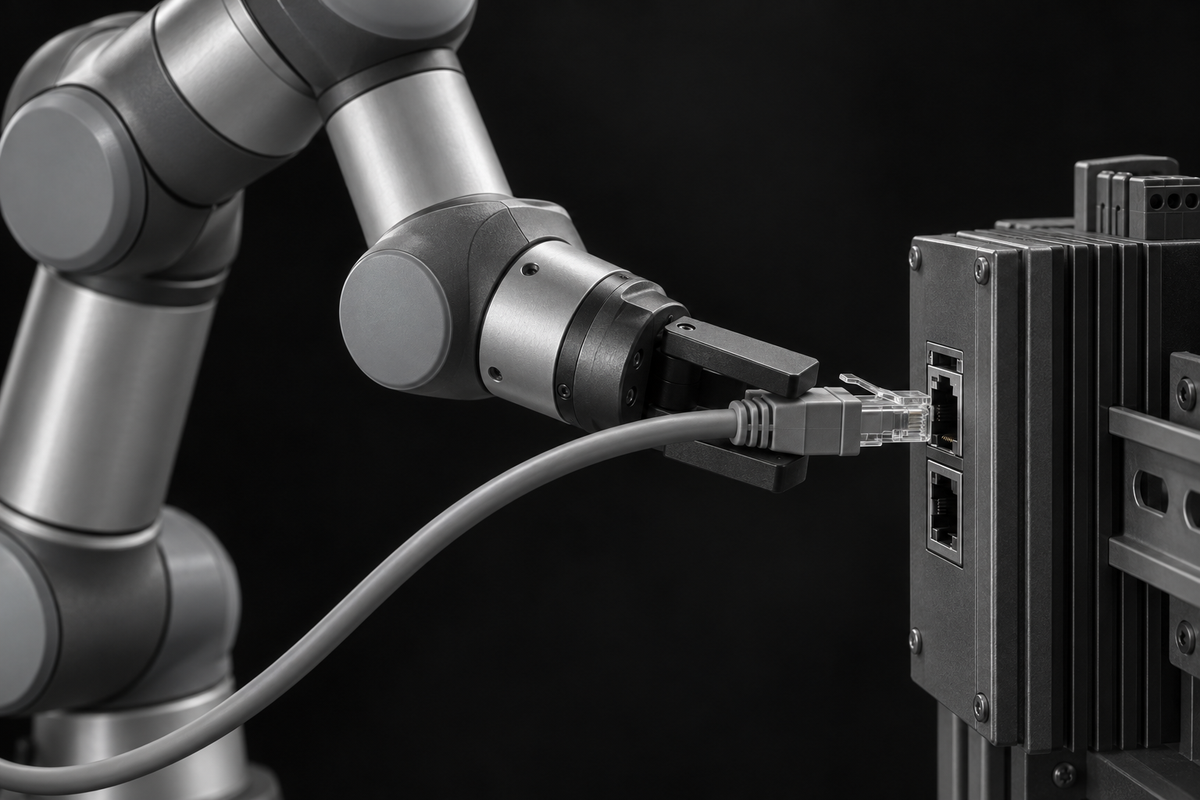
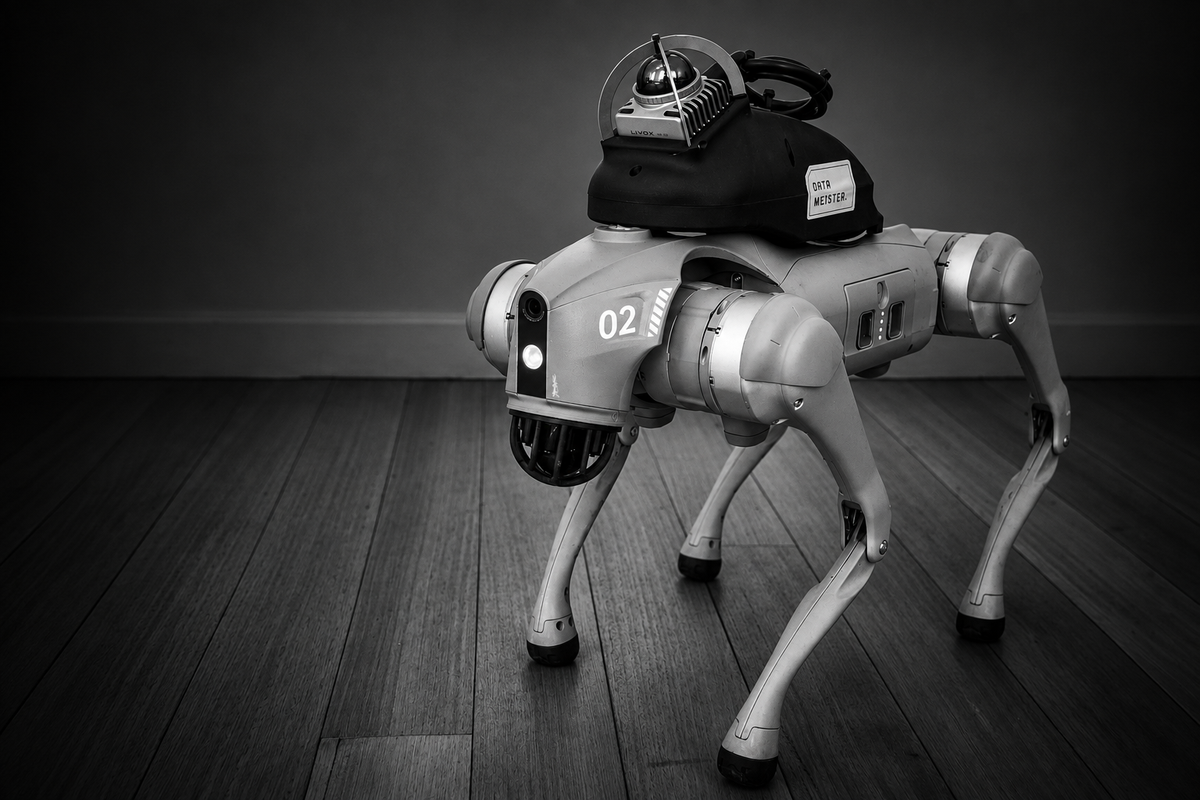
What sets us apart is depth, and a throughline to where it now points. Early on we took on whatever hard AI modelling problems came our way, across cybersecurity, medical imaging, and sports analytics, and we have been building, fine-tuning, and hosting LLMs for clients since GPT-2. Over time we specialized in spatial and visual intelligence: computer vision, 3D data, and the understanding and generation of scenes and assets. That work has found its place in Physical AI, getting models off the screen and onto robots that perceive and act in 3D space.
The other half is how we are built. Datameister is bootstrapped. We fund the deep work by doing real work, which keeps our incentives pointed at the same thing our clients care about: getting models into production. Good AI should earn its keep quickly in the real world, and the returns we chase come from systems that ship and keep running under load. A product that demos well but falls over in production is not what we are after.
That discipline shows up in our code. Everything we build lives in one monorepo, and every line in it has shipped in a real client project. Out of it grew the DM Library, our collection of AI capabilities proven in production, and the DM Platform for deployment, MLOps, and delivery. That work runs at scale: clients from startups to the Fortune 100, tens of thousands of hours of video processed a month, and on the order of 100,000 open-source packages scanned a day for security. The monorepo is where our speed comes from, and our filter against the hype: if something does not survive contact with real data and real deployments, it does not stay. We take the bleeding edge and get it into production.
Who are the Meisters?
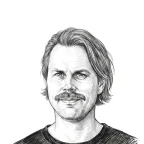
Datameister was founded by the two of us: Ruben Verhack (CEO) and Axel Vlaminck (CTO), engineers at heart with a strong passion for AI. We met at Oqton, the AI company later acquired by 3D Systems for a reported 180M USD in 2021. There we became an ad-hoc AI prototyping lab: management handed us an idea and a month to prove it out, technically and as a product. Axel led the technical side, Ruben owned the product. Killing most of those ideas gave us a sharp instinct for what AI can and cannot do, what scales, and what delivers value. It is also where we caught the itch to build something of our own.
Ruben
Ruben has been building software since 2007: first a company that took on all kinds of work, much of it image processing, then an AI radiology startup in 2019.
Alongside that, he built an academic career, earning a double PhD in computer science from Ghent University and TU Berlin. His doctoral work introduced Steered Mixture-of-Experts (SMoE), an image-based scene representation that predates today's Gaussian Splatting, and it earned a string of awards: the Google Faculty Award in 2015, a Best Paper Award at IEEE Transactions on Multimedia, and several Best Student Paper Awards. He was invited to speak at companies like Google (Mountain View and Zürich), Disney Research, and Netflix.
After the radiology startup, Ruben consulted across analytics, natural language processing, and computer vision. He then spent two years at Oqton, working on robotic welding and geometrical reasoning through AI.
Axel
Axel is a hands-on engineer who builds across the whole stack. He trained as an electronics engineer and moved into AI early, back when its courses were still considered exotic. His master's thesis was on training quadruped robots, years before Physical AI became a buzzword and the same ground Datameister works on today. He was one of the first employees at Oqton and one of the biggest drivers of its AI team.
Today he works across signal processing, computer vision, point clouds, and meshes. He is as comfortable with the physics as he is setting up MLOps environments or building his own transformer-based networks.
The team we built
We are just as proud of the people we have brought in since. Our Head of Engineering, Thijs Bernolet, joined from Autodesk and Oqton. Bernard Grymonpon, formerly of Showpad and Oqton, is our senior technical advisor. Jarne Van den Herrewegen holds a PhD focused on 3D AI representations. Behind them is a deeper bench of engineers and researchers whose work speaks for itself, and you will see many of them publishing here on the blog in the months ahead.
What's next
We are building out our in-house R&D and pushing further into spatial intelligence and Physical AI. If you are an engineer or researcher who wants to work on hard problems with real-world stakes, take a look at our open roles. And if you are a team with an AI problem that has to survive production, come say hi.